
Spring Pastas: Notes from Liguria and Friuli
What happens when regional wines meet regional dishes?

Three chapters in, spanning two seasons. Winter belongs to butter, broth, and steam rising from filled pasta on the plate. Spring belongs to green. Herbs. Olive oil. Young vegetables. Delicate doughs. The aptly titled “garden pastas.”
For this chapter of our year-long exploration of pasta and wine pairings, our tasting group turned toward Liguria and Friuli-Venezia Giulia, two regions where spring cooking feels less about richness and more about freshness, texture, bitterness, and perfume.
The Ligurian pairings appeared deceptively simple. On the other hand, the Friulian-filled pasta was complex and thought-provoking. And, throughout the night, we kept returning to the same questions:
How much of the pairing is about the sauce versus the pasta itself? What matters more: acidity, texture, or flavor similarity? And perhaps most importantly, when does the old idea of “what grows together goes together” actually hold true?
As the wines were poured and the plates were emptied, the answers became less certain and much more interesting.
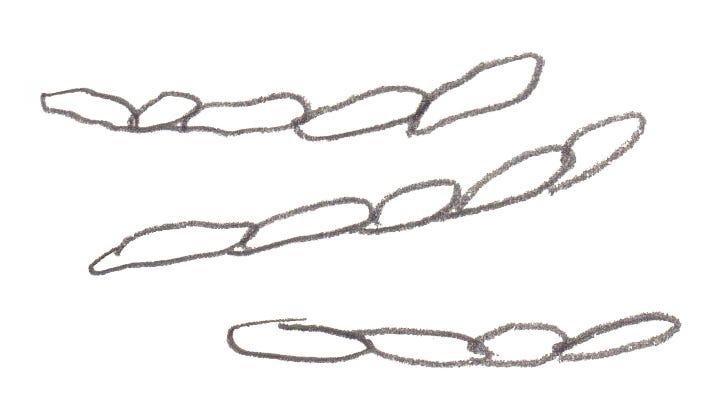
Trofie, Mandilli, and Pesto (Liguria)
The Ligurian flight may have been the clearest expression of regional pairing logic we have encountered so far.
Trofie and mandilli are two radically different pasta experiences sharing the same pesto. Trofie, the twisted hand-rolled pasta associated with Genoa, carried elasticity and chew, while the classic addition of green beans brought snap and crunch to the dish. Mandilli, loosely translated as “silk handkerchiefs,” felt entirely different: thin sheets of delicate pasta with almost no resistance, allowing the pesto to sit softly and elegantly across the palate.
And yet, despite the same sauce, the wines behaved differently with each pasta.
The pesto itself was deeply traditional: basil, olive oil, cheese, nuts, garlic. But even the word “traditional” became complicated throughout the night. Is there truly one Genovese pesto? Read twenty Italian cookbooks, and you may find twenty slightly different variations. Sit at twenty Ligurian family tables, and the recipe changes again. More garlic here. Less cheese there. Pine nuts replaced. Olive oil adjusted. The idea of one definitive local pairing may itself be an illusion.
Still, the Ligurian wines often felt inevitable with the food.
The Laura Aschero Pigato 2024 and Vermentino 2024 emerged as consensus favorites with the pesto. Laura Aschero, long celebrated for elevating the quality and identity of Ligurian wines, crafts wines that feel inseparable from the coastline itself. The Pigato carried tremendous texture and brininess, with savory herbs and stone fruit wrapped in salty Mediterranean air. The Vermentino was more lifted and herbaceous, full of citrus, fresh flowers, and sea spray. Both wines seemed to understand pesto.
The pairings worked not because the wines mimicked the flavors of the dish, but because they aligned structurally with olive oil, herbs, and bitterness. The wine’s acidity sharpened the basil. The saltiness amplified the cheese and melded with the olive oil. The wines refreshed, and our palates asked for a second sip, and a second bite.
The Ottaviano Lambruschi Vermentino 2024 may have been the most beautiful individual wine of the flight. Richer and texturally broader than the others, it showed tremendous polish and depth. Yet it struggled beside the trofie. The wine seemed almost too complete on its own. On the other side, it performed better with the mandilli, where the silky sheets of pasta allowed the wine’s elegance to emerge more naturally.
The Lunae Bosoni Vermentino 2024, one of Liguria’s largest estates, produced the opposite reaction. The wine was flashy and aromatic, but surprisingly flat beside the food; the wine never found a rhythm with either pasta.
And then came the single red wine.
Punta Crena Rossese 2024 reminded us once again that Liguria often ignores conventional wine logic. Rossese, the region’s pale, maritime red, carried notes of spice, dried herbs, blood orange, and pepper. Rather than fighting the pesto, the wine absorbed it. The slight bitterness in the sauce became more pronounced, while the savory edges of the Rossese deepened. It was not necessarily the most harmonious pairing of the evening, but perhaps one of the most intellectually interesting.
By the end of the Ligurian course, we found ourselves returning to the old phrase: what grows together goes together.
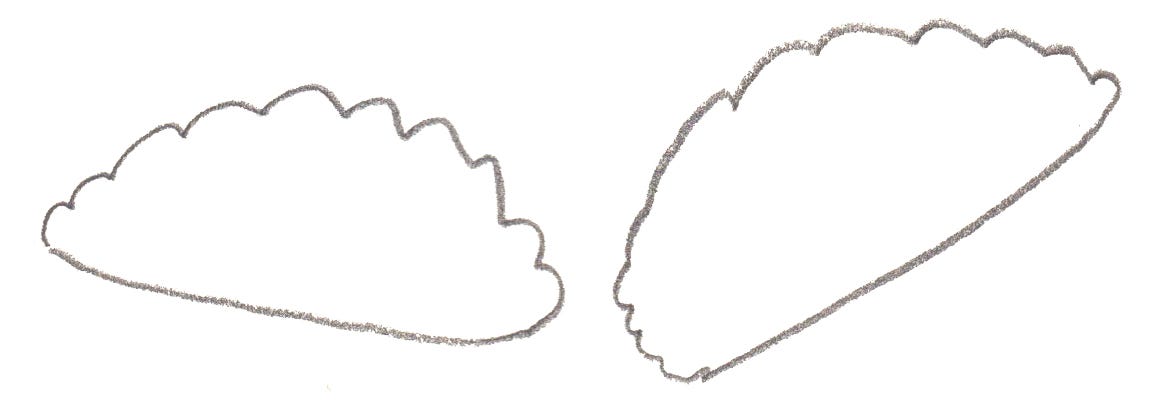
Cjarsons (Friuli-Venezia Giulia)
[char-SOHNS]
If Liguria brought a bit of clarity to our study, Friuli brought beautiful confusion. (Insert a Fellini film here.)
Cjarsons may end up being the most fascinating dish of this entire project. Part dumpling, part ravioli, part sweet-savory hallucination, the dish felt almost impossible to categorize. Ricotta, potato, cinnamon, dried apricot, mint, smoked ricotta, herbs, sugar, spice. At times, it resembled apple pie. At others, a pierogi. Then, suddenly, something entirely Alpine and agricultural folklore.
It was delicious. But it also forced an uncomfortable question to a table of wine professionals:
Does every dish actually need a wine pairing?
Disclosure: Because of my personal and professional relationship with Friuli, this course carried emotional weight. Massican’s flagship wine, Annia, was inspired directly by Friuli. I made wine in Friuli for five years. I have shared meals, stories, and glasses with many of the producers behind these bottles. Inevitably, I overserved the number of wines for the course. Chef Sarah, wisely anticipating this reality, over-prepared the number of cjarsons.
The Venica Friulano 2023 was, to me, the pairing of the night. Venica has long been one of Friuli’s benchmark estates, crafting wines that balance freshness with Friulian flavor and texture. Friulano itself remains one of Italy’s great food wines: almond, chamomile, pear skin, herbs, gentle bitterness. With the cjarsons the wine became intensely herbal and tea-like, carrying a snap of green apple acidity that refreshed the dish beautifully.
The tasting group, however, was unconvinced.
The Miani Friulano 2023 arrived from the opposite direction entirely. Enzo Pontoni’s wines are legendary for their concentration and intensity, often described as “Super Friulian.” Initially dominated by oak, the wine slowly opened to reveal Tocai Friulano’s classic bitter almond character. Rich, broad, and layered, it matched the dish’s weight and density more than its flavors.
The Duline Friulano 2022, from the biodynamic estate deeply inspired by natural farming philosophies, carried oxidative tones of baked apple and dried herbs. Intense and contemplative, it felt less like a pairing and more like an additional ingredient on the table. Swoon, if you want to.
The Pinot Grigio flight brought further complexity.
Duline’s 2022 bottling felt fresh, mineral, and tightly wound. Venica’s 2023 Ramato-style Pinot Grigio seemed, on paper, destined for success with the sweet-savory character of the cjarsons. Yet somehow the pairing never fully connected.
Perhaps my assumptions for the pairings were the problem.
The same could be said for the Ronco di Cialla Ribolla Gialla 2024. Ribolla, with its tension, citrus peel, and nervous acidity, felt theoretically perfect for the dish. But theory rarely survives on the table.
The pairing failed.
The red wines that followed were universally admired for their individuality. Ronco di Cialla Schioppettino 2023 carried pepper, violets, herbs, and freshness. Duline Schioppettino 2023 felt earthier and darker, while the Duline Refosco 2019 showed smoke, black fruit, bitter herbs, and a touch of sweetness that had settled beautifully into age.
All three wines were delicious.
None solved the puzzle of the cjarsons.
And Here We Are
As the evening came to an end, we realized we had spent less time identifying “perfect pairings” and more time interrogating the very idea of pairing itself.
The Ligurian wines and pastas seemed to support centuries of regional wisdom. Olive oil, basil, herbs, salt air, Vermentino, Pigato. Everything appeared connected by geography and culture.
Friuli complicated that narrative entirely.
The wines were beautiful. The dish was fascinating. Yet the connections were less obvious.
Perhaps regional pairings are not universal truths, but local conversations shaped by memory, household traditions, and personal taste. No two kitchens make the same pesto. No two cooks make the same cjarsons. The table is more complicated than the map. Why should we expect a single perfect pairing? Perhaps the wines themselves have evolved toward export markets and away from the regional table? Or perhaps dishes like cjarsons were never meant to be solved analytically with a wine pairing?
What became increasingly clear throughout the night was that the best pairings rarely announce themselves immediately. They make you want another bite, then another sip, then another bite again.
Those are the combinations worth remembering. Everything else is theory.
~
Pasta drawings by our dear friend, Amber Vittoria.
Still feeling the old maxim, what grows together goes together. But cracks in the infrastructure are showing.
Sometimes it appears we try too hard to make things work…and we forget to keep it simple. Just listen to the old timers…they know and remember what goes best with what, well before prices jumped way beyond their modest earnings….I now follow their lead earnestly….yet always aware that off vintages can also play havoc and expose those “cracks” you mentioned…and service?! Me, I’ll leave the expensive stemware in the cabinet and just pour the wine into a farmhouse tumbler and to hell with projecting notions of superiority and fancifulness…it’s the best way to get the village old farts to look forward to returning to your home for lunch next week!